Updated · How we check facts
Read the neighbourhood respectfully
Marrakech’s historic Jewish quarter remains part of the Medina’s everyday life. Observe street patterns, shops and restored heritage while respecting residents, worshippers and private doorways.
Use clear landmarks
Place des Ferblantiers is the easiest orientation point between Bahia and the Mellah. GPS may drift in narrower lanes, so save the next destination and note the route back.
Build a coherent walk
Combine the Mellah with Bahia, the Jewish cemetery or El Badi rather than crossing Marrakech between visits. Keep time for an unplanned pause and check access before entering religious or memorial sites.
The Mellah and Bahia: a shared border
The Mellah was built in 1558, under the Saadian sultan Moulay Abdallah, with two entrance gates. It is the same sultan who founded the Saadian Tombs the year before.
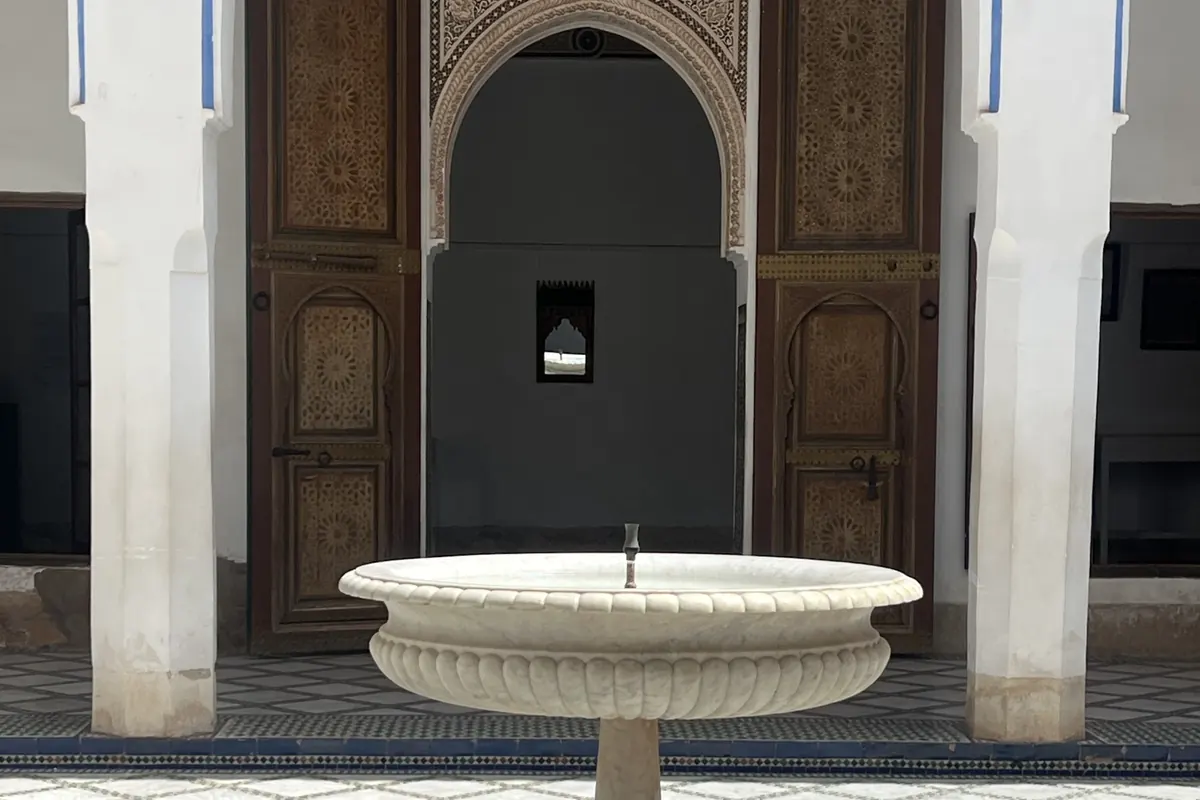
It lies in the south of the Medina, between Bahia Palace and El Badi, and Place des Ferblantiers is the way in. Bahia grew right up to it: as Ba Ahmed bought more houses, the palace took over much of the old neighbourhood north of the Mellah.
The quarter still has two synagogues, Negidim and Slat al-Azama, and a Jewish cemetery. Jewish cemetery →
A restoration programme for the quarter began in 2014.
Questions visitors ask
When was the Mellah of Marrakech built?
In 1558, under the Saadian sultan Moulay Abdallah.
How far is the Mellah from Bahia Palace?
A few minutes on foot, through Place des Ferblantiers.
Are there synagogues in the Mellah?
Yes: Negidim and Slat al-Azama.