The essential Bahia Palace experience is a sequence: intimate riads first, then carved and painted rooms, followed by the sudden scale of the Grand Courtyard. Look at the transitions as closely as the landmarks.
Researched and updated 22 September 2026.
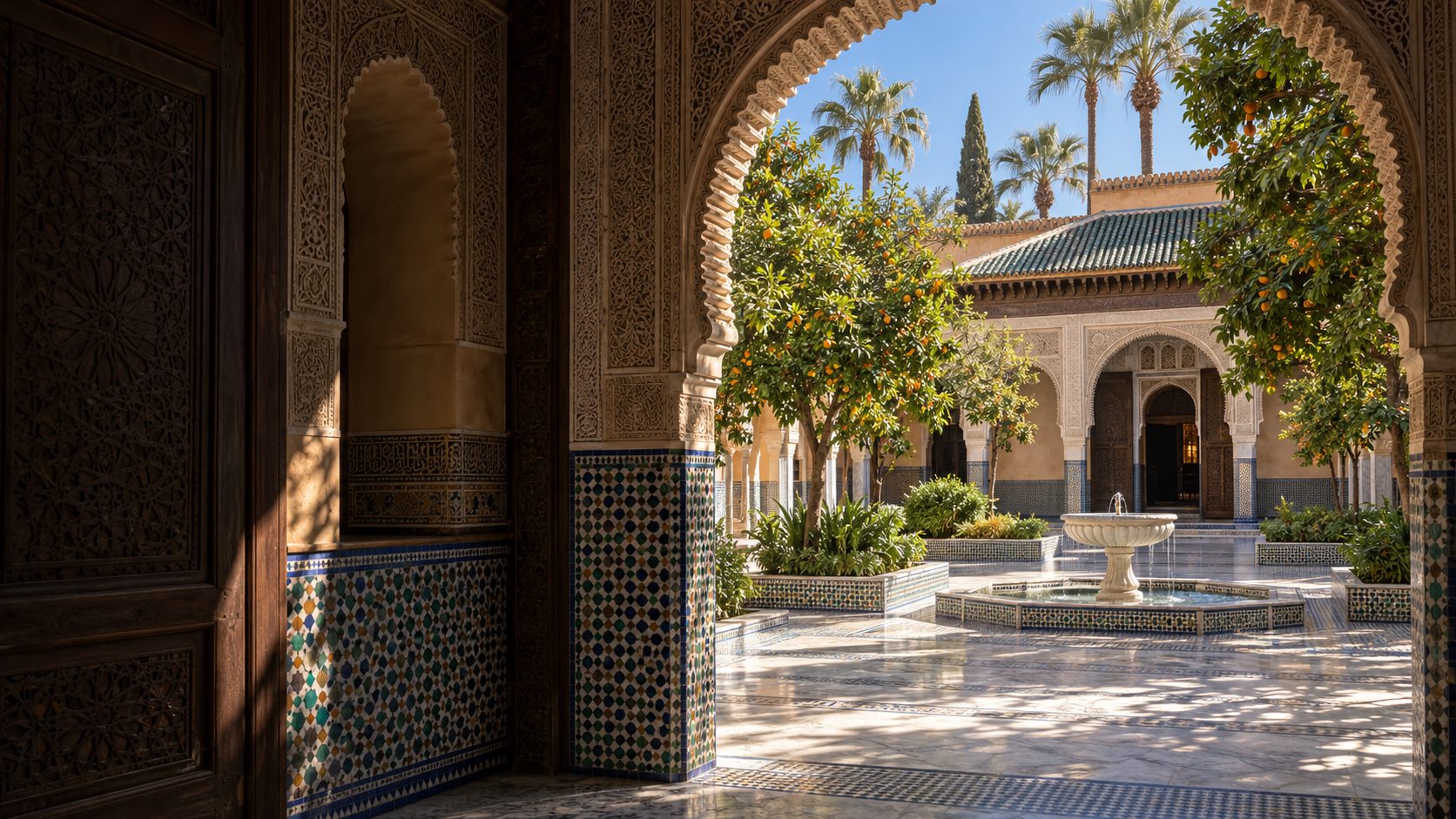
The Grand Courtyard
The palace’s largest open space is the visual climax for many visitors: a broad marble and zellige surface, a central fountain and long arcades painted in vivid colour. Walk to more than one corner; the proportions change as the arcades overlap.
The small riads and gardens
The quieter courts explain how the palace was lived in. Orange trees, water and shade temper the heat while rooms open inward for privacy. These spaces are smaller than the Grand Courtyard but often feel more personal.
The craft at eye level
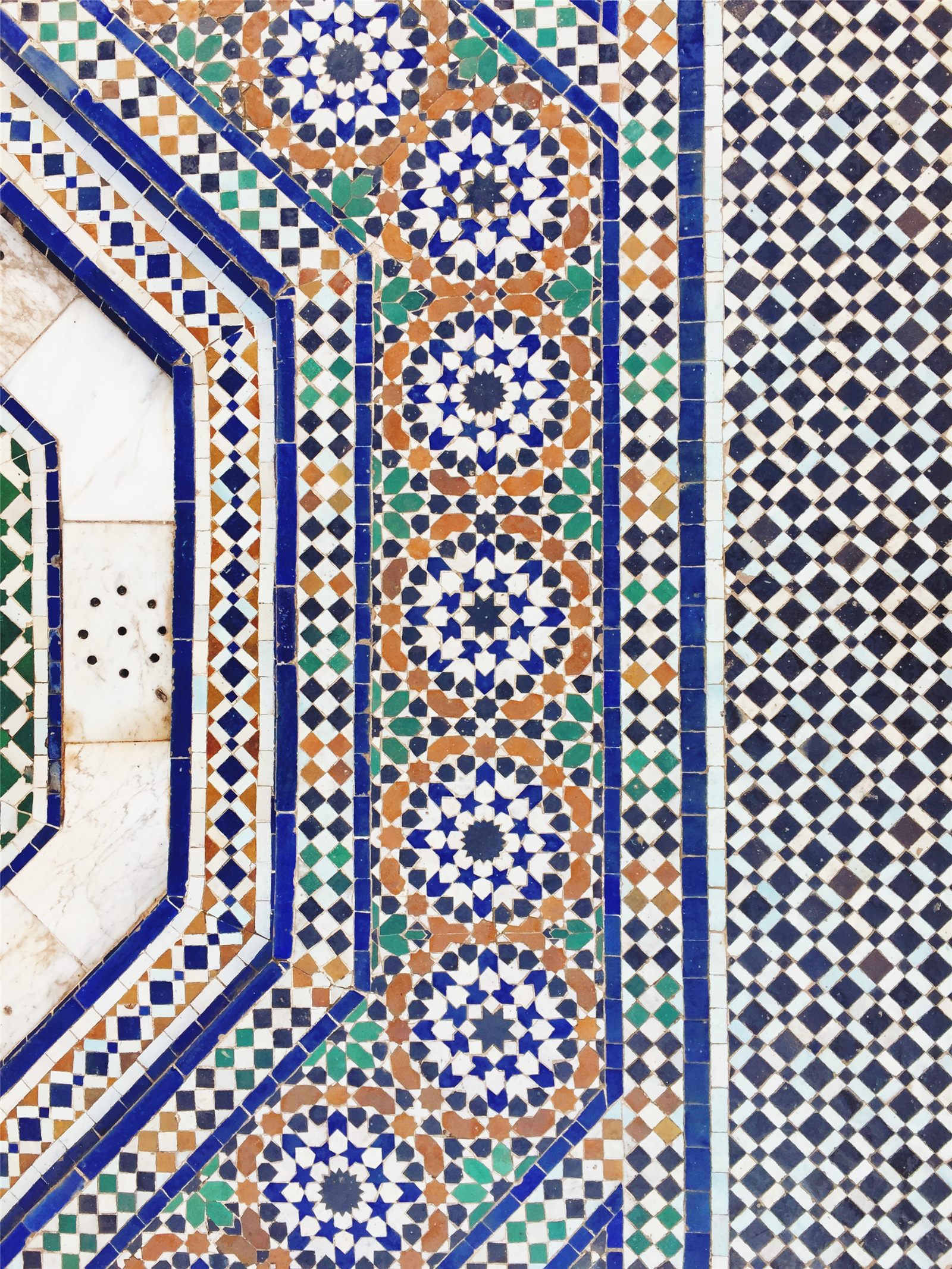
Notice how carved plaster frames doors, how tiny zellige pieces resolve into geometry, and how painted cedar changes from ceiling to ceiling. Bahia is most memorable when you alternate between whole rooms and one carefully observed detail.