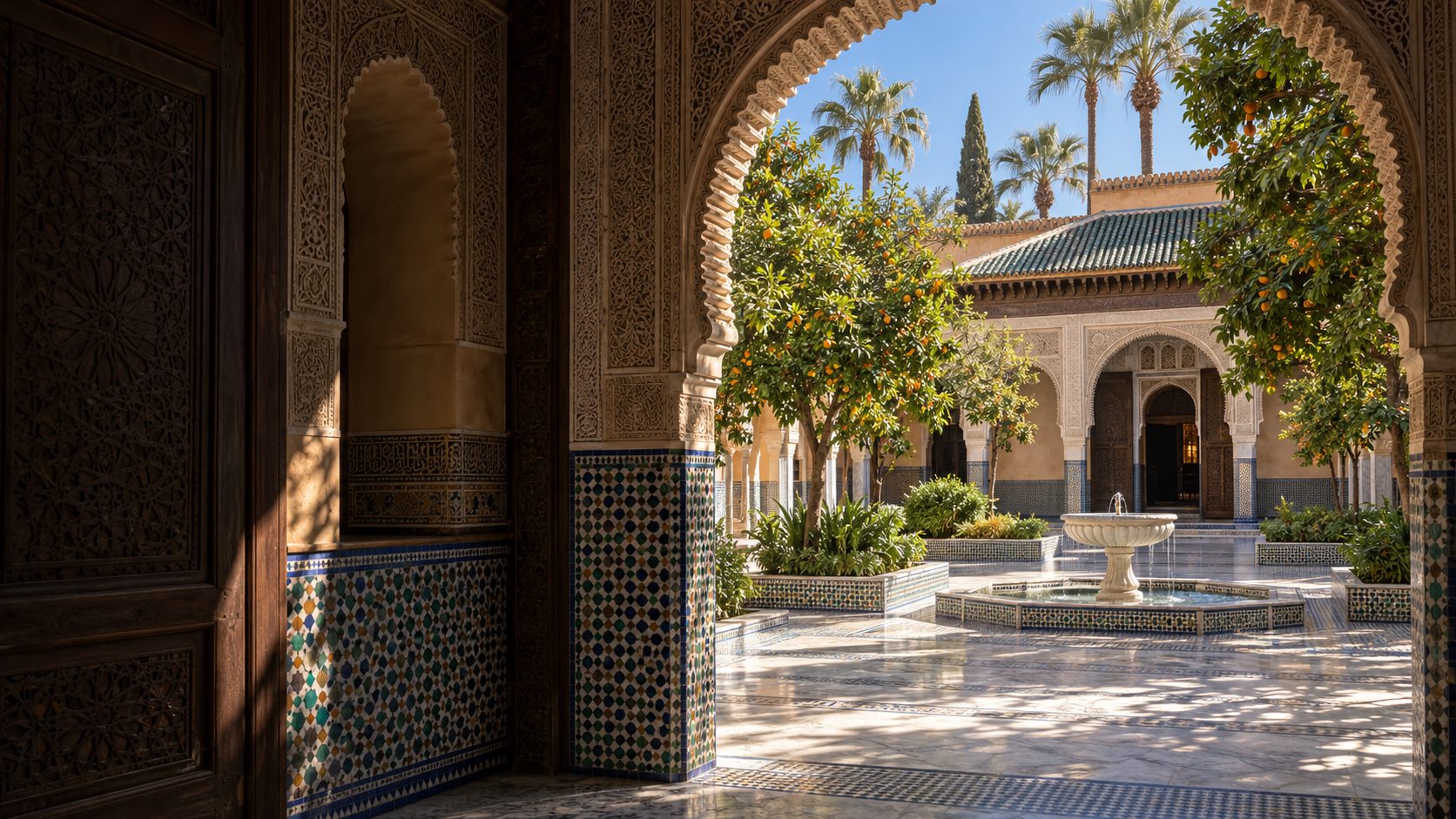
The riads of Bahia Palace are inward-looking garden courts where planting, water, shade and decorated rooms work as one composition. They explain the palace’s private scale more clearly than any single façade.
Researched and updated 22 September 2026.
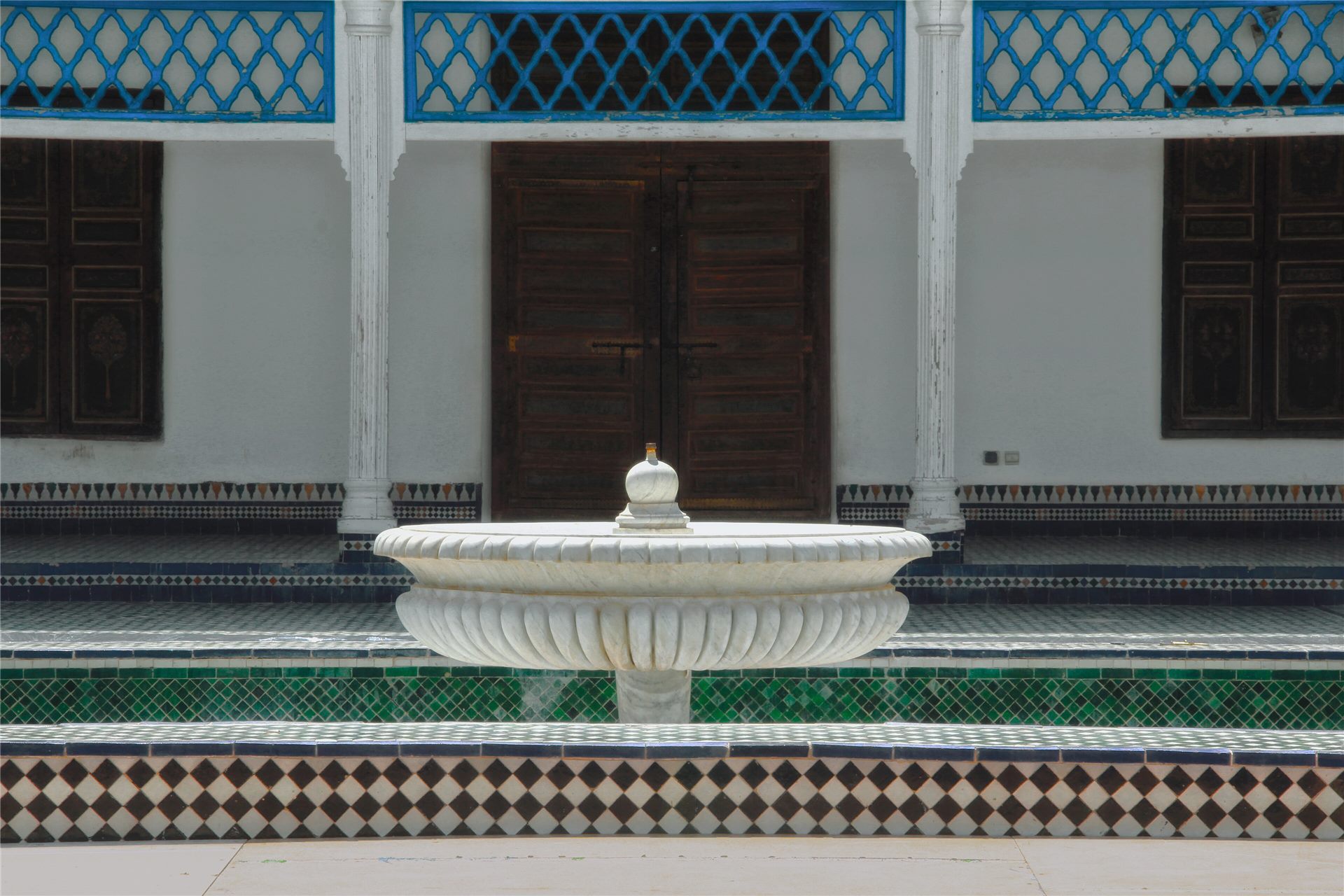
What a riad means here
A riad is organised around an interior garden rather than an outward street view. At Bahia, planted courts create privacy, cooler air and a measured transition between rooms. The garden is part of the architecture, not decoration added afterward.
How to read the space
Stand near a doorway before walking in. Notice the central axis, the relationship between paths and planting, and how rooms open toward the court. The most useful view is often from the threshold, where interior shadow frames the garden.
What may change on your visit
Visitor circulation and restoration can limit access to individual courts. Treat named spaces and old plans as orientation, then follow the route and signs open on the day.
Context that changes how you see it
A useful distinction is that “riad” describes an organising type, not simply a garden. Rooms face inward toward a planted court, so privacy, circulation and climate are solved together. That is why the experience changes when you step from a narrow passage into open light.
Compare the riad with the Grand Courtyard. One supports retreat through planting and shade; the other supports ceremony through scale and hard surfaces. This comparison explains more than treating every open space as a courtyard.
Questions visitors ask
Is every courtyard a riad?
No. A riad is organised around an interior garden, while a courtyard may be primarily paved and ceremonial.
Can visitors enter every riad?
No. The open route can change with conservation and operations.
What should I photograph?
Frame the planting from a shaded threshold so the relationship between room and garden remains visible.
Sources and method
We separate documented facts from visitor interpretation and revise this page when stronger evidence becomes available.