Updated · How we check facts
Choose shoes for historic surfaces
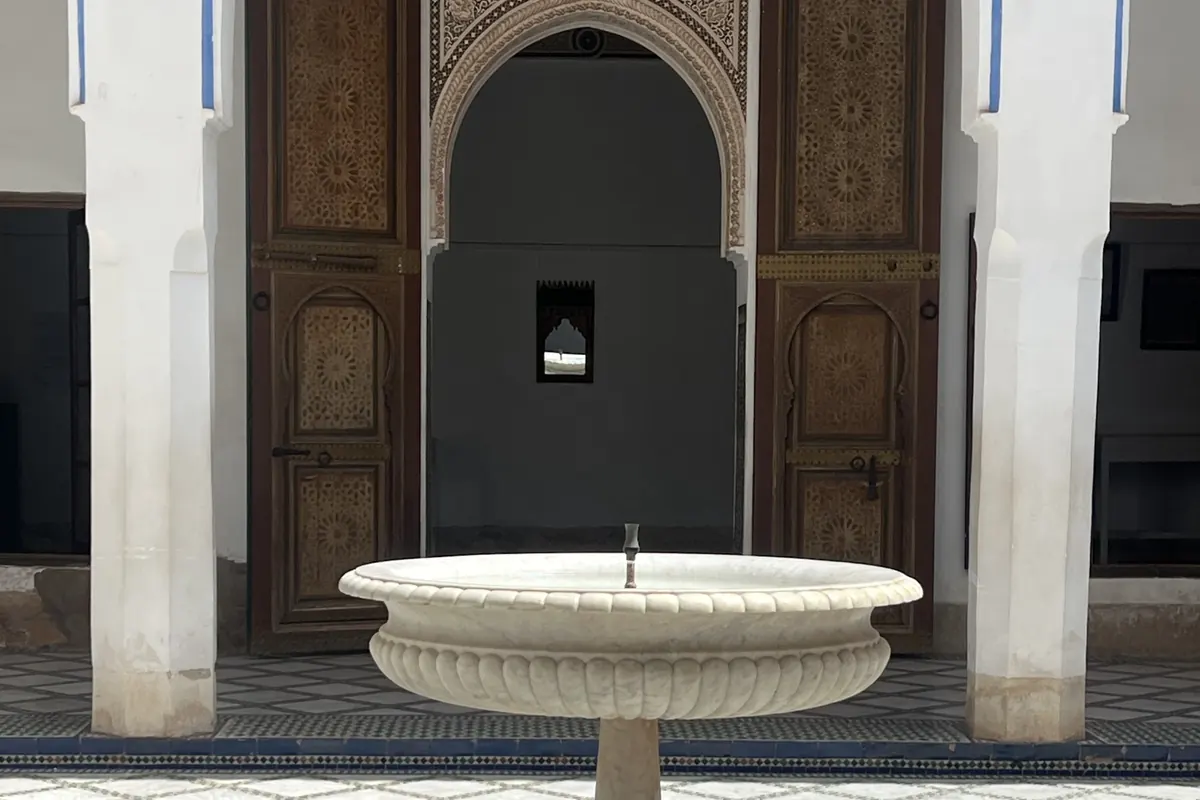
Flat walking shoes or secure sandals are the practical choice. Smooth zellige, worn stone and thresholds require more attention than an ordinary pavement, especially after rain or when the route is crowded.
Dress for sun and shade
Marrakech can be hot, and winter mornings are cold. Breathable clothing, a hat for the approach and a light removable layer give more flexibility than heavy or restrictive clothes.
Keep the visit respectful and practical
Formal dress is unnecessary, but clothing suited to a public historic monument is appropriate. Keep loose bags, scarves and camera straps close so they do not brush fragile plaster, woodwork or other visitors.
What the weather means for your clothes
Summer. In July and August the average afternoon high in Marrakech is about 37 °C. Light, loose clothing, a hat and water matter more than anything else; the Grand Courtyard is open to the sky.
Winter. Days are mild, with an average high of about 19 °C in January, but mornings are cold: the average minimum is 5.9 °C. A layer you can take off is enough.
Rain. It is rare: about 29 rainy days a year, almost none from June to August. On a wet day, take care on marble and tile.
Rules. The Ministry publishes no dress code for Bahia. Clothing suited to a public historic monument is the useful standard.
Questions visitors ask
Is there a dress code at Bahia Palace?
The Ministry publishes none. Wear what suits a public historic monument.
What shoes should I wear to Bahia Palace?
Flat shoes with grip; the floors are marble, tile and old stone.
How hot is Marrakech in summer?
Average highs of about 37 °C in July and August.