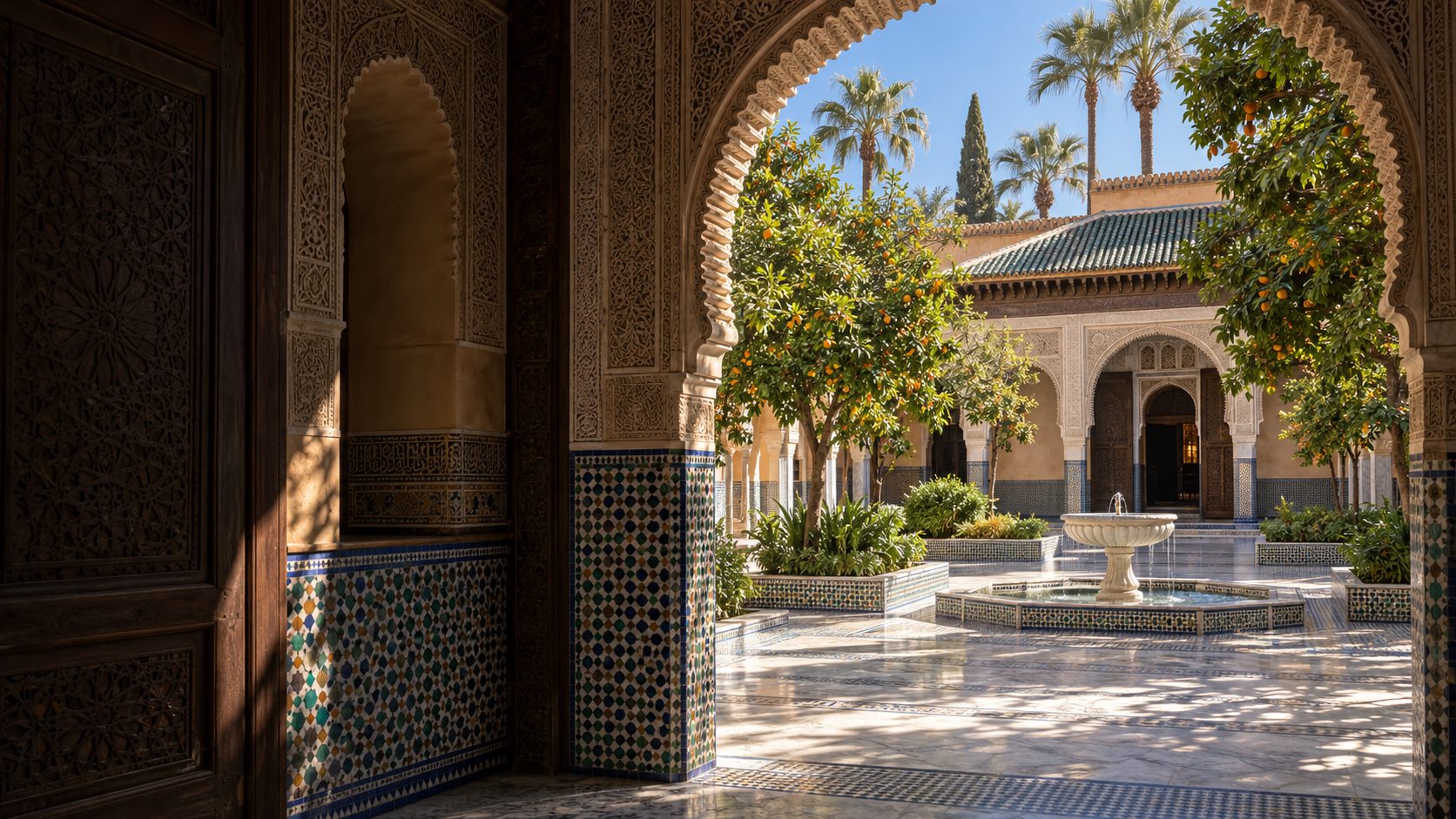
Bahia’s zellige is architecture made from small hand-cut pieces of glazed tile. Seen from a distance it reads as perfect geometry; up close it reveals colour variation, joints and the labour of assembly.
Researched and updated 22 September 2026.
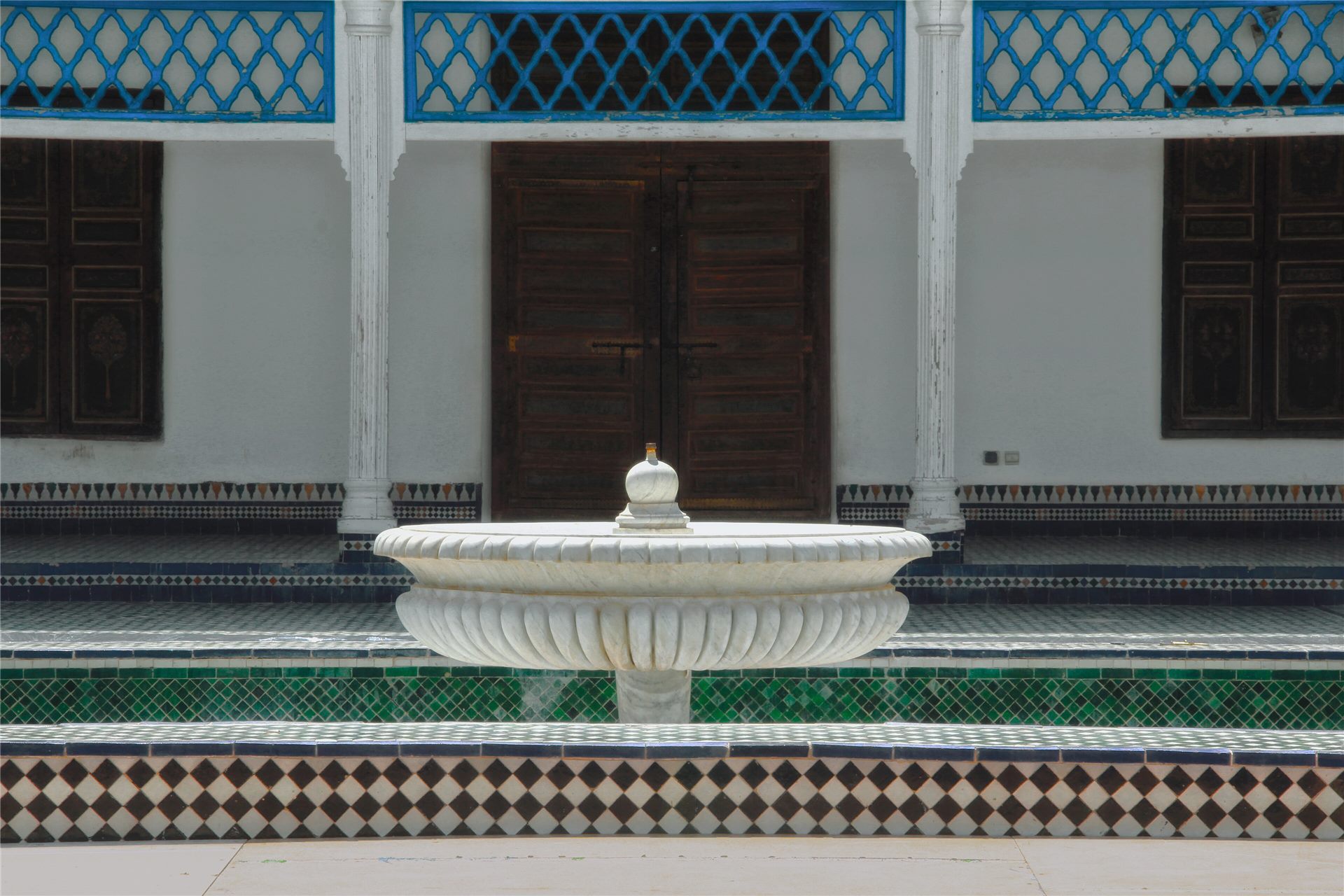
How zellige is made
Coloured glazed tiles are cut into precise shapes, then assembled face down into repeating geometric units before being fixed with mortar. The technique allows complex stars, polygons and interlocking bands to cover large surfaces.
Why it belongs in a courtyard
Tile tolerates contact, water and changing temperature better than fragile painted decoration. In Bahia, zellige creates a durable lower zone while plaster and cedar occupy the protected surfaces above. Fountains make its glazed colours more vivid.
How to photograph it
Keep the camera parallel to a flat panel when you want clean geometry. For a stronger sense of place, include a threshold, column base or reflection so the pattern retains scale. Avoid stepping backward into the visitor route while framing the floor.