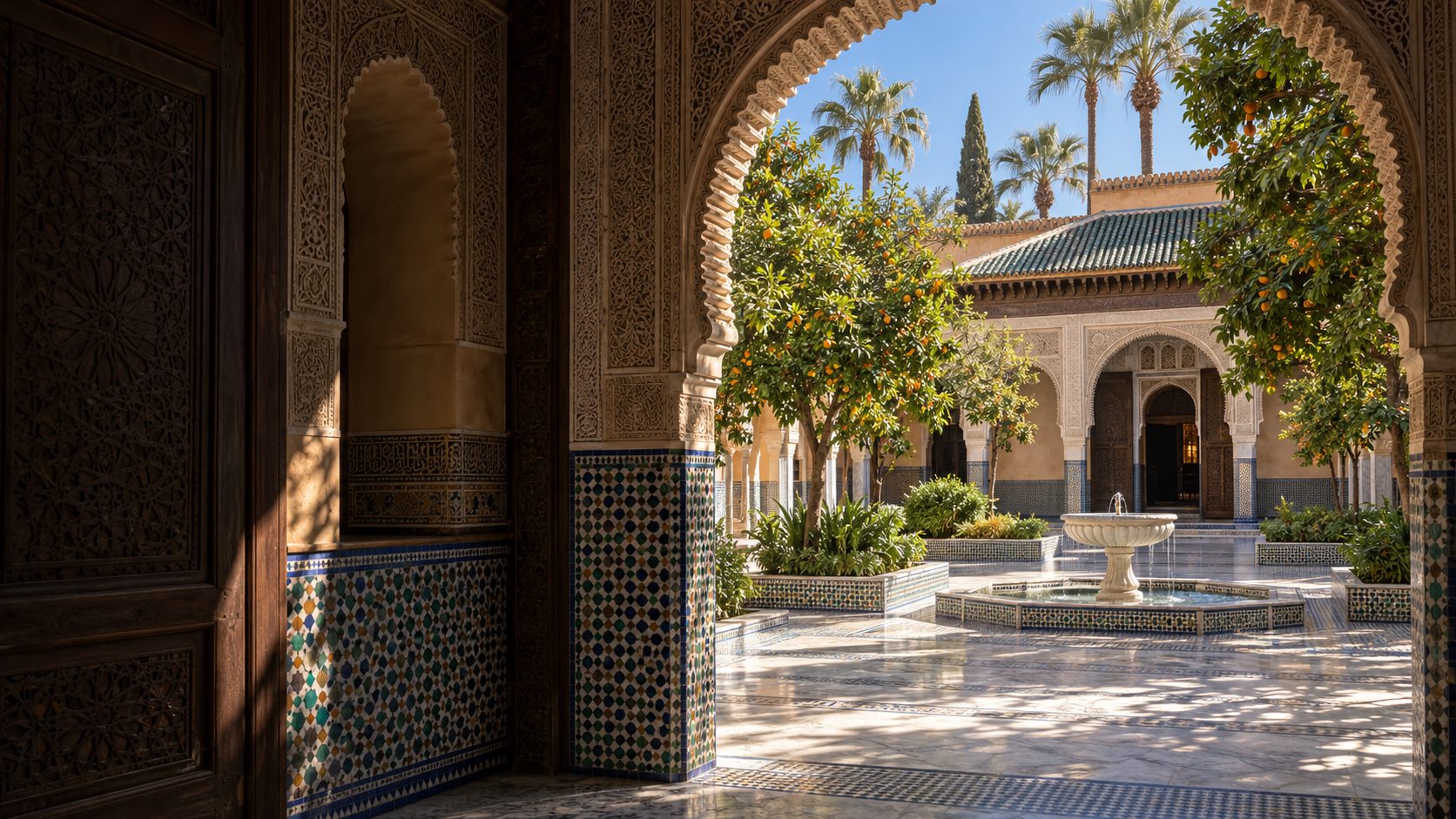
The painted cedar ceilings are among Bahia Palace’s most memorable details. Their colour, geometry and carpentry reward slow looking, especially in rooms where daylight enters from a courtyard.
Researched and updated 22 September 2026.
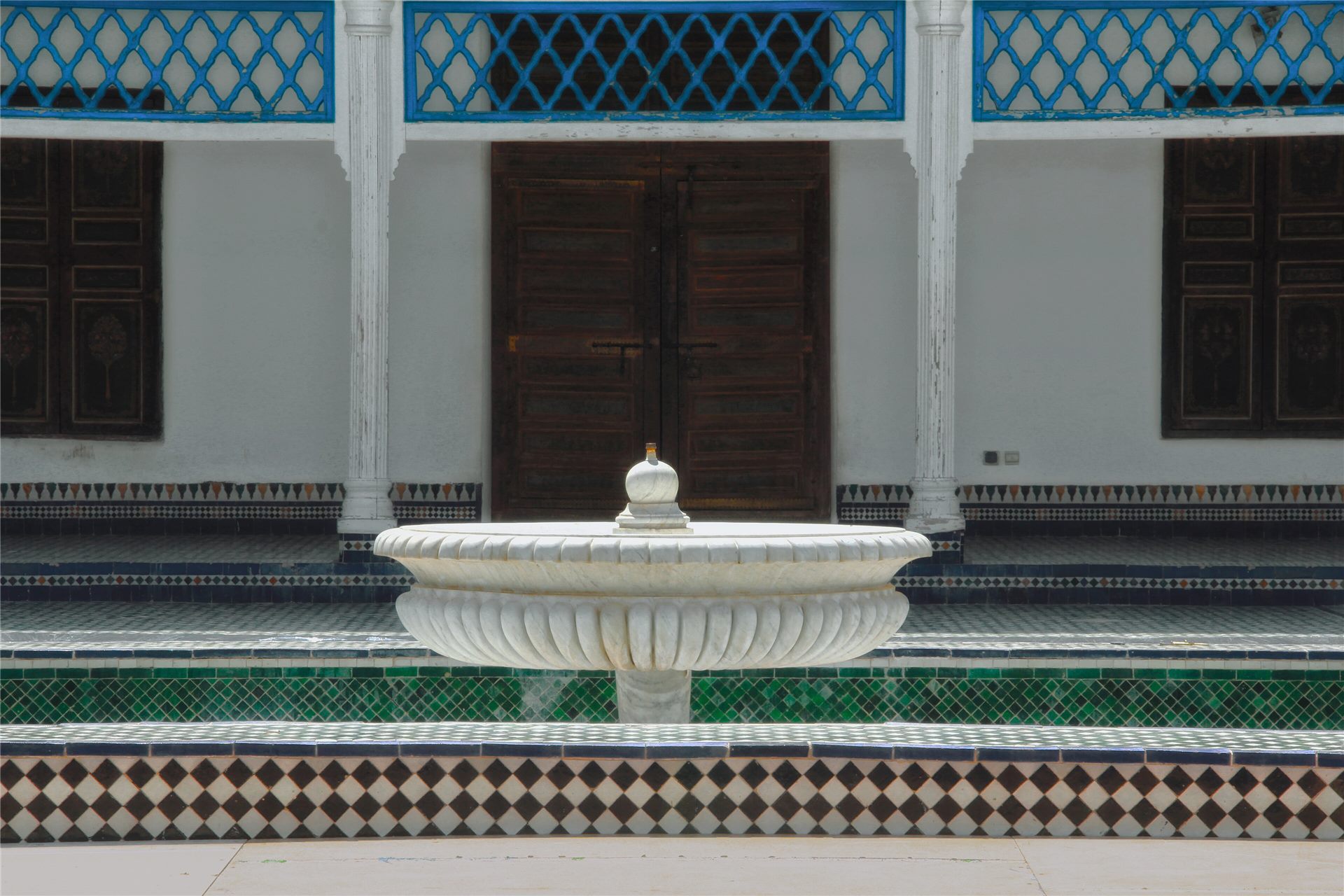
Why cedar was used
Cedar is closely associated with prestigious Moroccan carpentry. At Bahia it forms beams, panels and richly painted overhead compositions that bring warmth and colour to rooms otherwise shaped by plaster and tile.
How to look without rushing
Move to the edge of a room and let your eyes adjust. Follow the repeated geometry from the centre toward the borders, then compare the ceiling with the doorway and wall decoration below. Different rooms use different scales and colour rhythms.
Photographing ceiling detail
Use a wider view first to preserve the ceiling’s relationship to the room, then make a closer image of one panel. Avoid flash where prohibited and keep passages clear for other visitors.
Context that changes how you see it
A ceiling photograph alone can flatten the craft. Read the carpentry as part of a room: the span tells you about structure, the borders organise the surface, and reflected courtyard light changes the perceived colour.
Claims that a ceiling took a precise number of years should be treated cautiously unless tied to a conservation report or inscription. The strongest description begins with visible construction, paint and geometry, then adds documented history.
Questions visitors ask
Are the ceilings original?
Much historic fabric survives, but conservation history varies by room and should not be simplified into one claim.
Can I use flash?
Follow current signs and staff instructions; natural side light usually gives a better result.
Why cedar?
Cedar has a long association with prestigious Moroccan carpentry and works for beams, panels and carved or painted surfaces.
Sources and method
We separate documented facts from visitor interpretation and revise this page when stronger evidence becomes available.