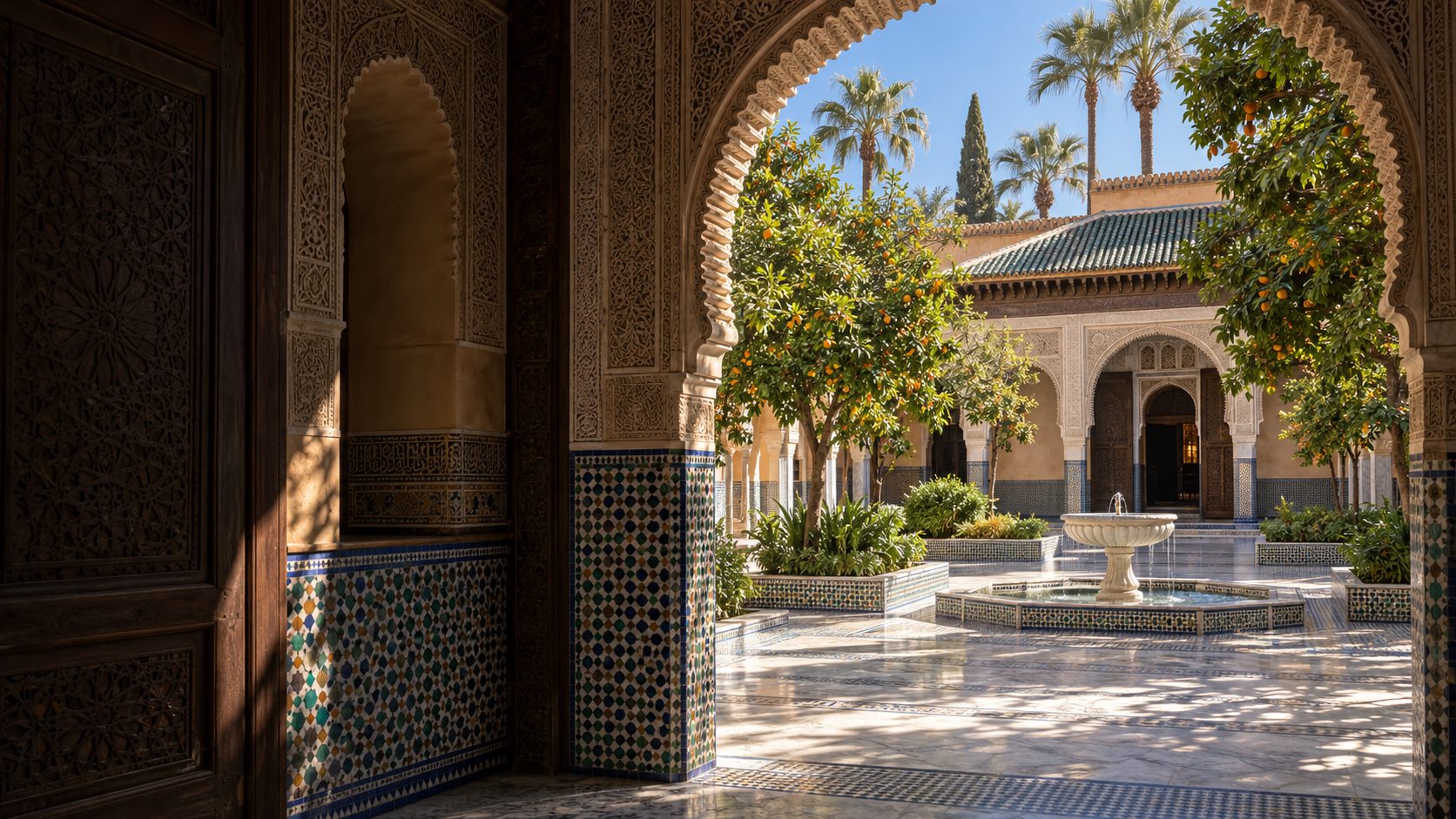
Painted and carved cedar shapes ceilings, doors and structural details throughout Bahia Palace. It is one of the materials that makes the interiors feel warm despite their stone, tile and plaster surfaces.
Researched and updated 22 September 2026.
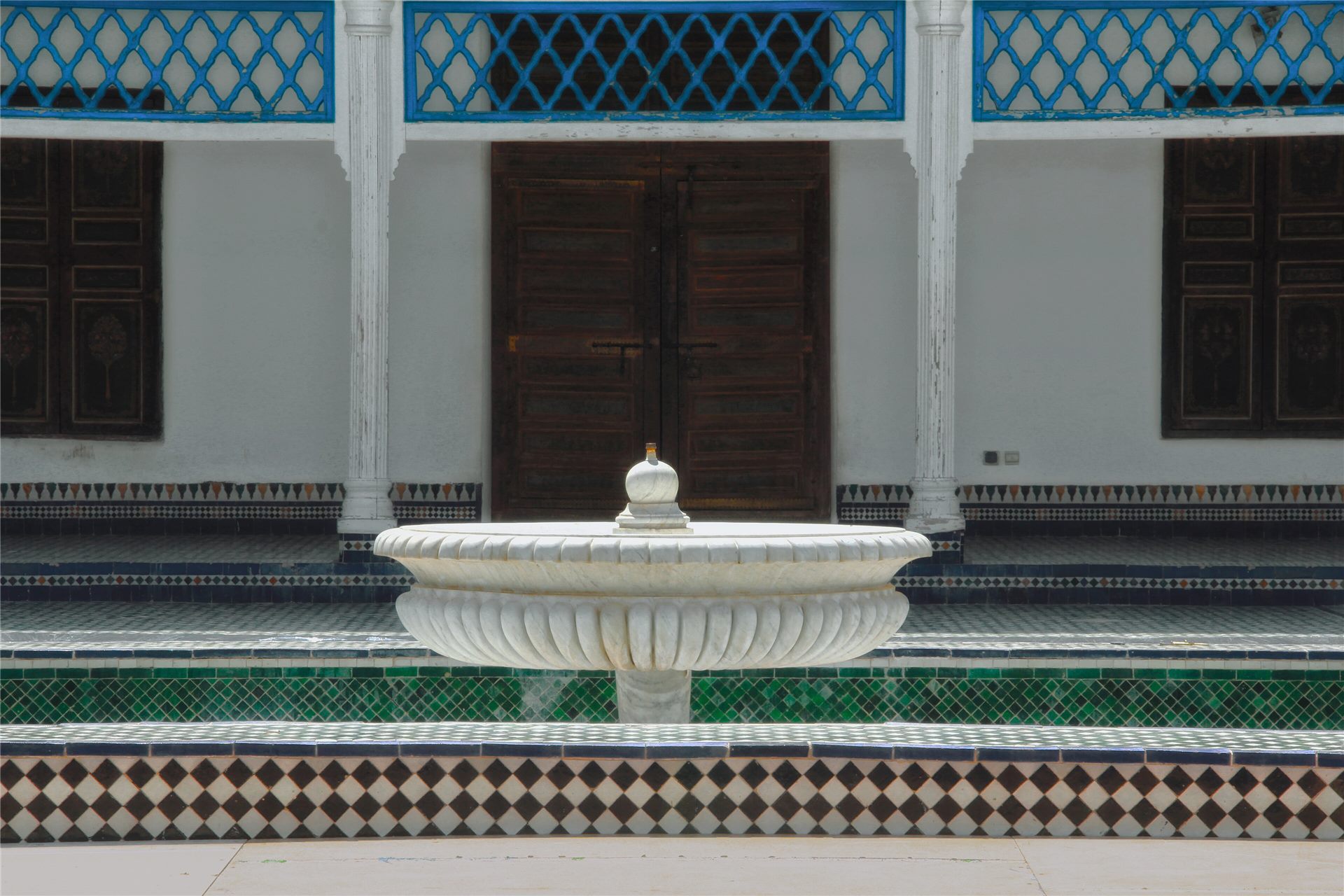
Where visitors encounter cedar
Look for beams, ceiling panels, doors and screens. The wood often carries painted geometric or floral decoration and marks the transition between enclosed rooms and bright courtyards.
Craft before symbolism
Begin with what can be observed: joints, repeated panels, layers of paint and the way timber spans the room. Avoid treating every colour or shape as a fixed symbol unless an authoritative source identifies it.
Light, age and conservation
Painted wood can appear different under shade, reflected courtyard light or conservation work. A photograph records one lighting condition, not a permanent colour standard.
Context that changes how you see it
Wood connects structure and ornament. A beam spans space, a door controls privacy and a painted panel carries colour; calling all three “decoration” misses their different jobs.
Colour seen today reflects age, light and conservation as well as original design. Descriptions should identify visible tones without promising an exact historic palette that has not been established for the specific room.
Questions visitors ask
Where did the cedar come from?
Cedar is associated with Moroccan mountain forests, but a room-specific origin needs documentary evidence.
Is the wood carved or painted?
Both techniques appear; examine doors, beams and ceiling panels separately.
How should it be photographed?
Include part of the room first, then record a detail without flash or contact.
Sources and method
We separate documented facts from visitor interpretation and revise this page when stronger evidence becomes available.