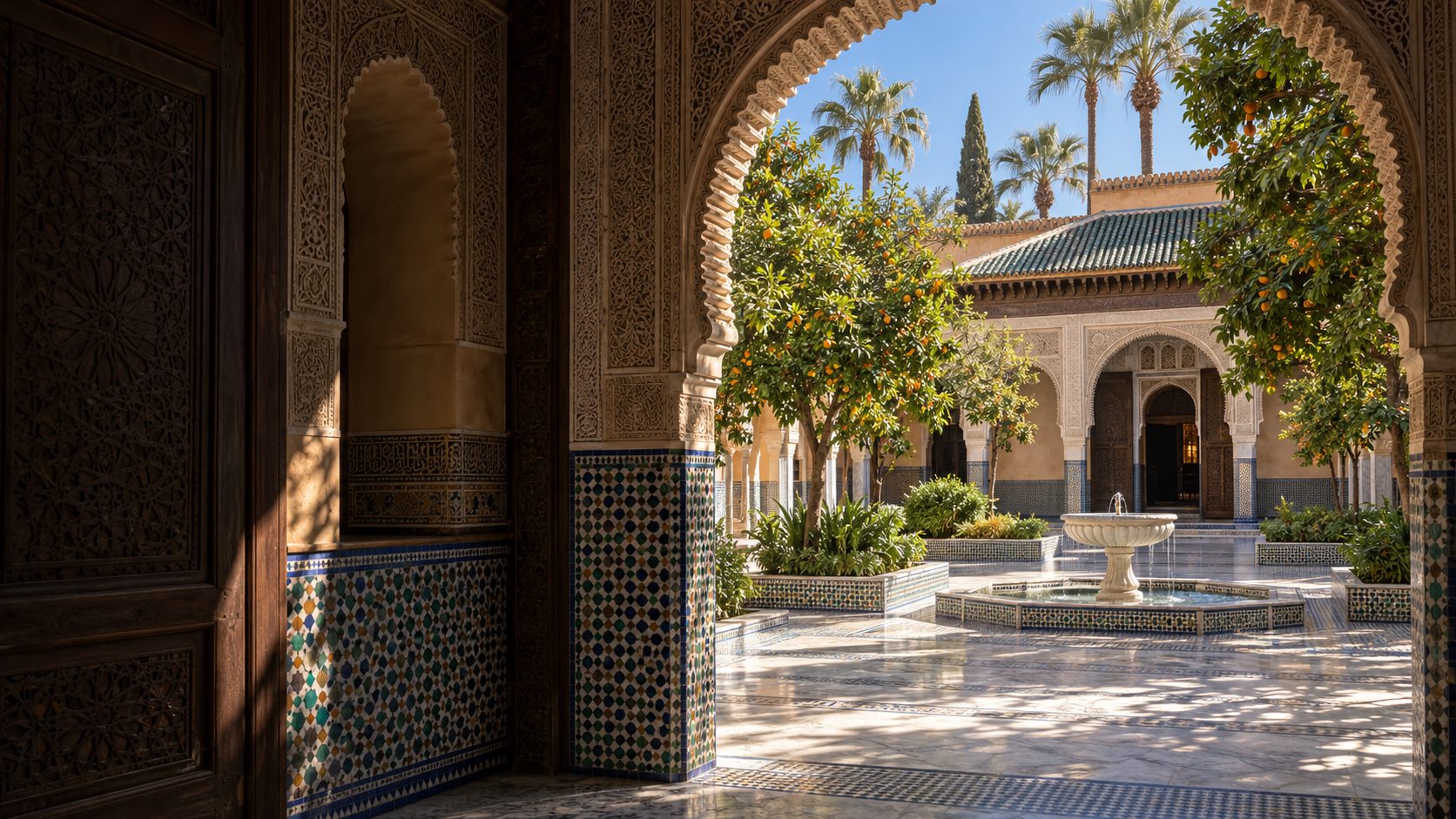
Carved plaster gives Bahia Palace its lace-like surfaces. It frames arches, fills wall panels and creates a fine transition between colourful zellige below and painted wood above.
Researched and updated 22 September 2026.
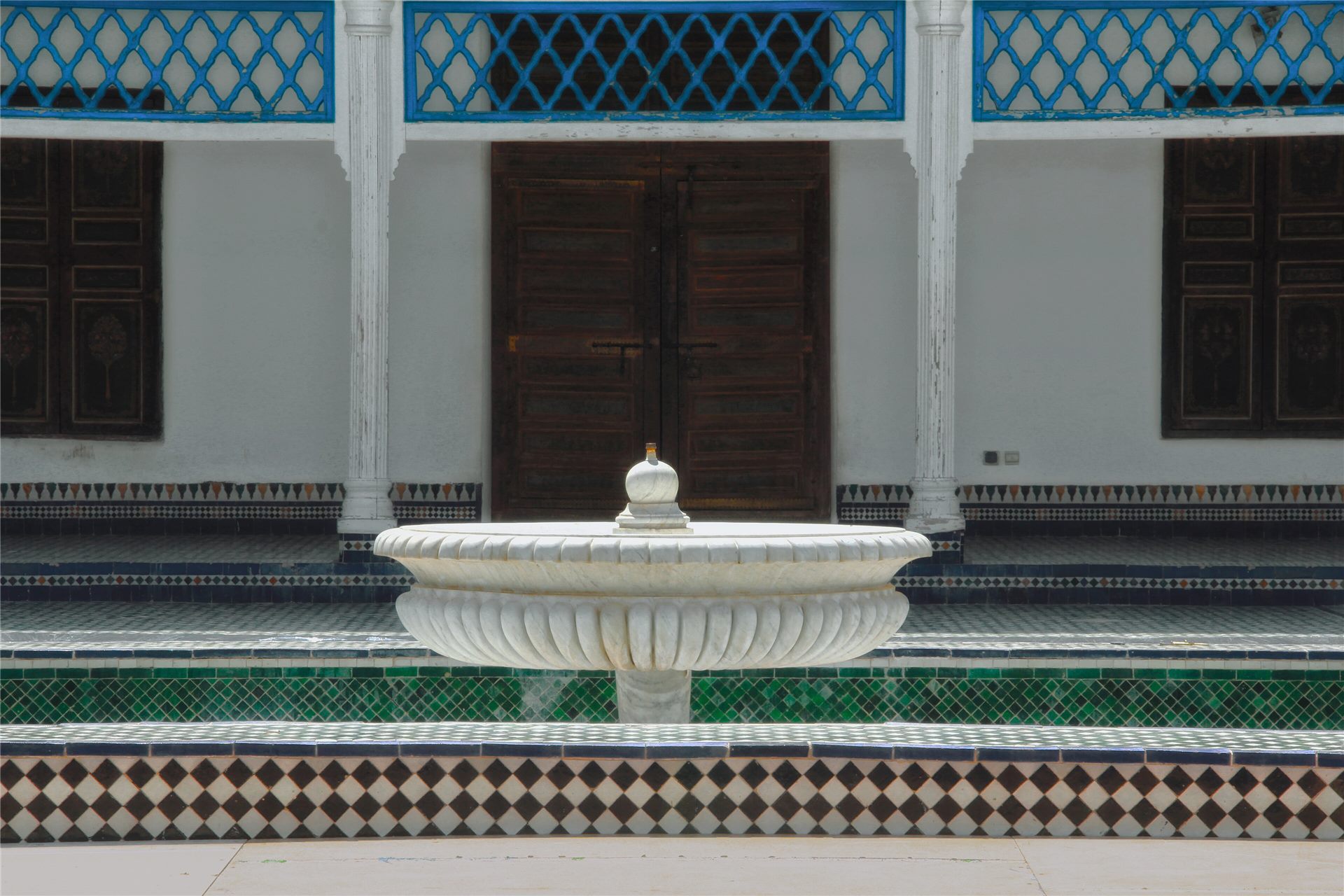
How the carving works visually
Shallow relief becomes more legible when light crosses it from the side. Repeated geometry, foliage and calligraphic bands can appear flat at first, then gain depth as you change position.
Its place in the decorative system
The plaster is rarely isolated. It sits between durable tile at lower level and timber above, allowing the room to move from dense colour near the floor to lighter, more intricate surfaces overhead.
Look closely without touching
Historic plaster is vulnerable to contact and abrasion. Use distance and changing light to study the carving, follow barriers and never lean equipment against decorated walls.
Context that changes how you see it
Carved plaster is best read at an angle. Side light reveals relief, while a straight frontal view can make the same surface look printed. Step sideways without crossing barriers and watch how shadow separates the layers.
The responsible interpretation is visual before symbolic. Geometry, foliage and inscription may coexist, but assigning a meaning to every motif without translation or documentation creates attractive misinformation.
Questions visitors ask
Is it stone carving?
No. The fine pale relief visible around many arches is worked plaster.
Can visitors touch it?
No; repeated contact damages fragile historic surfaces.
Where is it easiest to see?
Look around arches and upper wall zones where side light creates shadow.
Sources and method
We separate documented facts from visitor interpretation and revise this page when stronger evidence becomes available.